The 5D index
Five simultaneous views of your codebase: project map, lexical, vector, symbols, Git history. The agent understands your code in depth, even without documentation. Classical agents have only one view.
What each dimension sees. What it prevents.
Project map
Sees the global architecture: modules, dependencies, side effects. Prevents hallucinated structures and changes that ignore how the system actually fits together.
Lexical + vector search
Finds everything, by exact text or by meaning, without knowing where to look. Prevents missed occurrences and duplicated logic scattered across the codebase.
Symbols / AST
Sees the exact call sites of every function, type and variable. Prevents partial refactors that compile but leave stale paths behind.
Git history
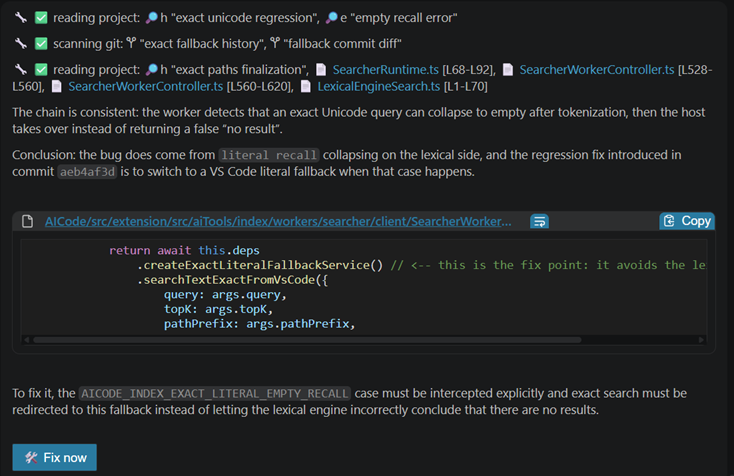
Sees how the code evolved and why. Traces a regression to the exact commit that introduced it, instead of guessing.
Inside the index.
The whole index, including vector embeddings, is computed and stored on your local drive. It never leaves your machine: see Data sovereignty.
What it makes possible.
This depth of understanding is what makes large legacy projects workable, and what makes hard tasks succeed instead of stall. One example is the refactor documented in this publication: ↗ Full case study, published on arXiv.
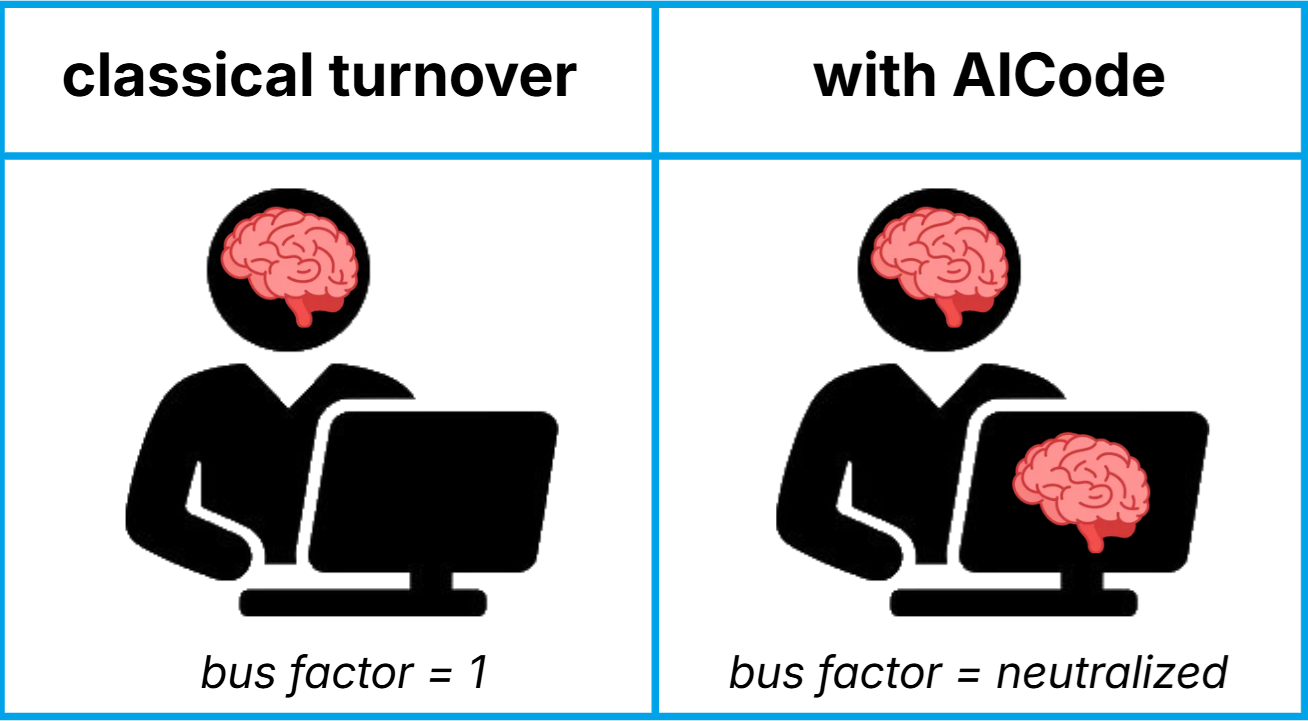
It also makes your delivery immune to turnover: the architectural knowledge that used to live only in the heads of historical developers is captured, frozen, and instantly available to anyone on the project.